
India Joins US-Led Pax Silica Alliance to Secure AI and Chip Supply Chains
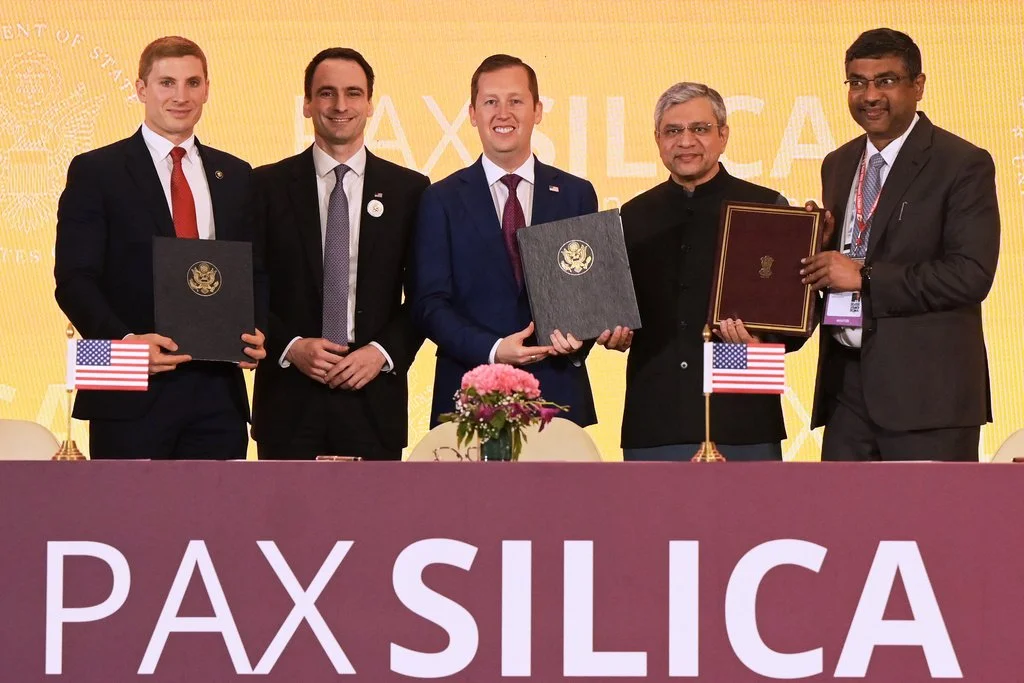
India's IT Minister Ashwini Vaishnaw, second right, poses for a photograph with U.S. Ambassador to India Sergio Gor, center, U.S. Under Secretary of State for Economic Affairs Jacob Helberg, first left, and other officials after signing an agreement in New Delhi, India, Friday, Feb. 20, 2026. (AP Photo)
On Feb. 20, 2026, India officially joined the US-led Pax Silica alliance. Pax Silica is the United States’ flagship effort to secure supply chains for critical minerals and semiconductor hardware essential for artificial intelligence and AI security while fostering a new economic security consensus among its allies and trusted partners. This marks the transformational shift in India’s growing technology dominance, solidifying its presence within the Western-aligned technology coalition. This effort came during the AI Impact Summit in New Delhi, a global summit for discussing policy on artificial intelligence.
The Secretary of War (formerly SOD) Pete Hegseth and other US officials have characterized such moves as essential for national security, particularly as the administration seeks to designate certain non-compliant tech entities as supply-chain risks. "Today, as we sign the Pax Silica declaration, we say no to weaponized dependency and no to blackmail," said Jacob Helberg, US Under Secretary of State for Economic Growth, Energy, and the Environment. He further affirmed that economic security is now inextricably linked to national security.
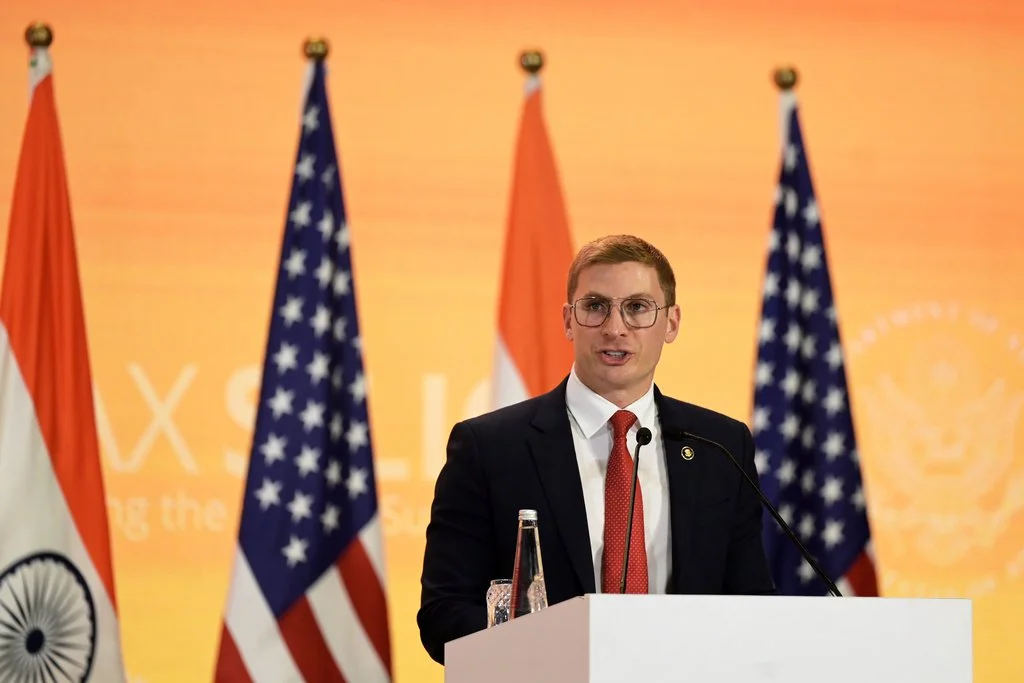
Under Secretary of State for Economic Affairs Jacob Helberg speaks at the AI Impact Summit in New Delhi, India, Friday, Feb. 20, 2026. (AP Photo)
The Pax Silica efforts to secure all stacks of the global technology supply chain, not limited to semiconductors or minerals, essentially encompass everything that might pose a security threat to members with access to technology. The agreement focuses on securing the raw minerals and early-stage components needed to build high-tech hardware, specifically quartz, polysilicon, and rare earth elements. While the US leads in chip design, China currently maintains a near-monopoly with 70% mining and refining of rare earth minerals used to make silicon that is used for manufacturing the processors. This poses a potential threat to the US's security.
By the addition of India with its positions, with a growing engineering workforce and manufacturing capacity, as a trusted alternative to Chinese-dominated supply nodes. India’s IT Minister Ashwini Vaishnaw emphasized that Indian engineers are already developing two -nanometer chips and noted that the alliance will facilitate the development of the one million skilled professionals needed for the next decade of global growth.
Alongside the broader multilateral pact, India and the US signed a "Joint Statement on the India-U.S. AI Opportunity Partnership" to reboot a relationship previously strained by tariff friction. The deal also includes expanded trade in GPUs used for massive data centers and joint research into next-generation compute processors. US Ambassador to India Sergio Gor described India’s entry as "strategic and essential," noting that India’s engineering depth provides the necessary scale for a global AI strategy independent of coercive foreign actors. This alliance represents a move toward AI sovereignty, allowing India to fuse US technology with local data and strategic tech giants to secure its hardware backbone.
Overall, this alliance marks a definitive shift in India’s global presence, as New Delhi finally chooses to be seen as an important member in future technology avenues. By tethering its economic future to the American silicon stack, India is implicitly betting that Western partnership offers more stability than the risks of remaining a neutral bystander or joining forces with China. However, this shift raises a difficult question for the next decade: can a nation truly maintain its strategic sovereignty when its most vital infrastructure is built on foreign-designed code and hardware?
As the Iranian-Americans in Silicon Valley face a similar crisis of dual loyalty amid Middle Eastern conflicts, India’s total commitment to Pax Silica may eventually force a similar conflict between national identity and the global technological order.