
The EU invites Canada to become an “Associate Member,” but what does that really mean?
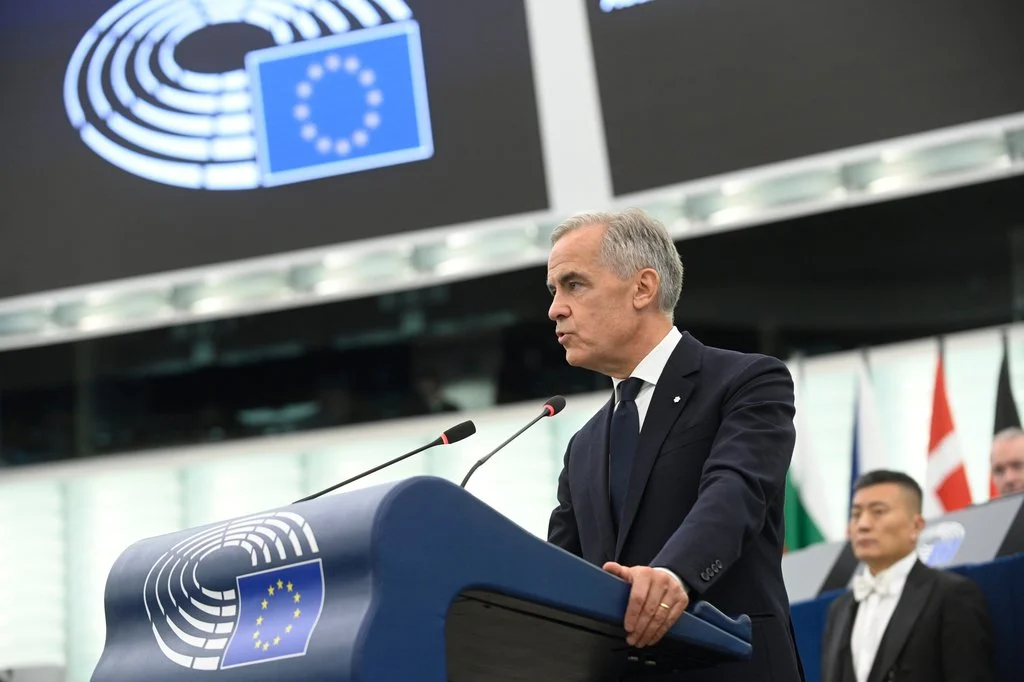
Canada's Prime Minister Mark Carney delivers a speech during a formal sitting at the European Parliament in Strasbourg, eastern France, Thursday, Sept 17, 2026. (AP Photo/Pascal Bastien)
On September 16, Ursula von der Leyen, President of the European Commission, announced Canada would be “opening the door” to Canada becoming an "Associate Member” of the European Union (EU). The proposed “associate membership,” which does not exist in any current EU treaties, would sit somewhere above free-trade partners but below full EU membership.
The decision to strengthen their alliance and create this new “associate member” category is a direct response to the breakdown of trade negotiations between the US and Canada in August of this year. After weeks of negotiations, the US imposed a 50% tariff on a series of Canadian goods and Canada responded with reciprocal tariffs. This made it clear that Canada needed to look outside of the US for support. Von der Leyen echoed this in her State of the Union address to the European Parliament in Strasbourg, saying “...[I]n this new world we must urgently reimagine our partnerships and build global coalitions for our resilience and democracies.”
This association will allow EU-Canadian cooperation to enter new domains like defense, cybersecurity, and AI. There has also been a significant focus on energy since the 2022 Europe Energy crisis which was the result of sanctioning Russian oil. Canada, importantly, has resources that are attractive to the EU including oil and rare earth minerals like lithium, nickel, cobalt, and rare earths which are important for battery making and a transition to a greener future.
Canada and the EU have long been trade partners. In 2016 they removed 98% of tariffs with the Comprehensive Economic and Trade Agreement (CETA). However, the agreement has yet to be ratified in 10 of the 27 EU member states. Additionally, there is the Strategic Partnership Agreement (SPA), which encourages diplomatic dialogue on climate change, human rights, research, and more. This association membership takes a history of cooperation one step further. It is likely that a lot of the specifics about the deal and the extent of the cooperation will be hashed out at the EU-Canada conference in Montreal at the end of October.
Joining the EU as a member state is a lengthy process. Countries must first meet the Copenhagen Criteria by having strong democratic institutions, a free market, and the ability to enact existing EU legislation into their national framework. Then the European Commission, composed of one commissioner per member state, agrees to begin accession negotiations between the country and the EU. These negotiations can last years or even decades and there are currently nine countries in the accession process. As part of the accession process, an Association Agreement, usually a bilateral trade and security agreement, is signed between the EU and the candidate State.
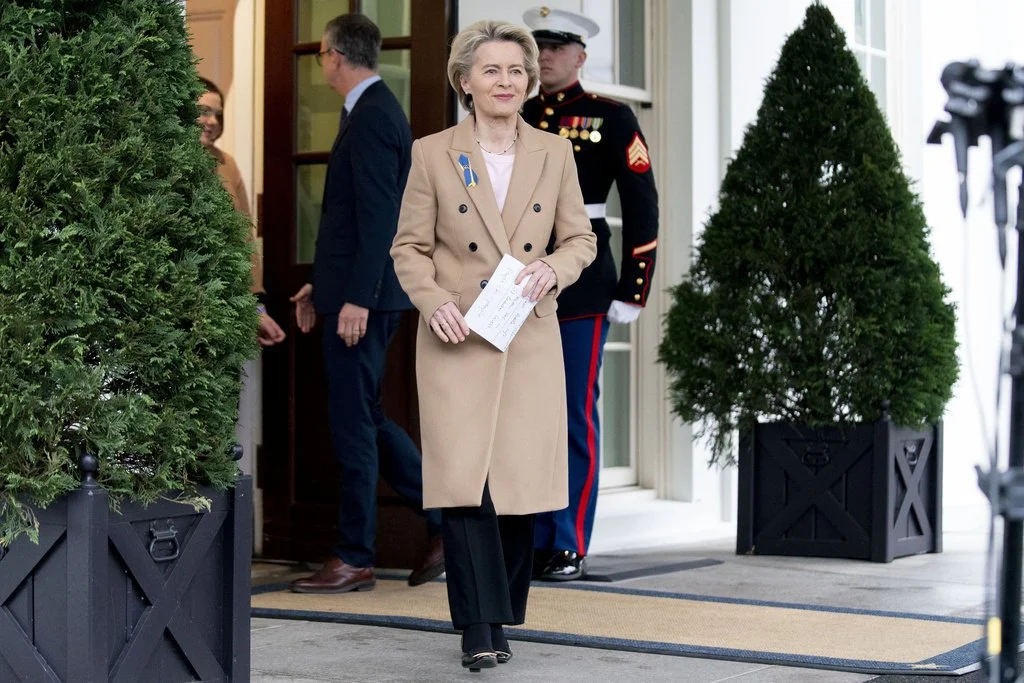
European Commission President Ursula von der Leyen walks out of the West Wing to speak to members of the media after meeting with President Joe Biden at the White House in Washington, Friday, March 10, 2023. (AP Photo/Andrew Harnik)
There has been some suggestion of Canada joining the EU as a full member state by several European leaders, including Finnish President Alexander Stubb and French Foreign Minister Jean-Noël Barrot. Canada, despite meeting most of the EU’s requirements, is not interested in joining as a full member state, with Canadian Prime Minister Mark Carney saying “Canada is not in a position, nor seeking, to become a full member of the European Union." It seems geography is the main reason preventing Canada from joining the EU as a member state.
US president Donald Trump responded poorly to the news saying that it would likely trigger hostile “heavy tariffs.” The Canadian response is fairly positive although it has provoked the anger of certain Canadian MPs like Jamil Jivani who said on X “Conservatives will NEVER support Mark Carney’s Liberal plan to have Canada join the hopelessly run, over-regulated, and self-destructive EU.”