
Op-ed: Bangladesh's Measles Outbreak Reveals Gaps in Vaccination Framework
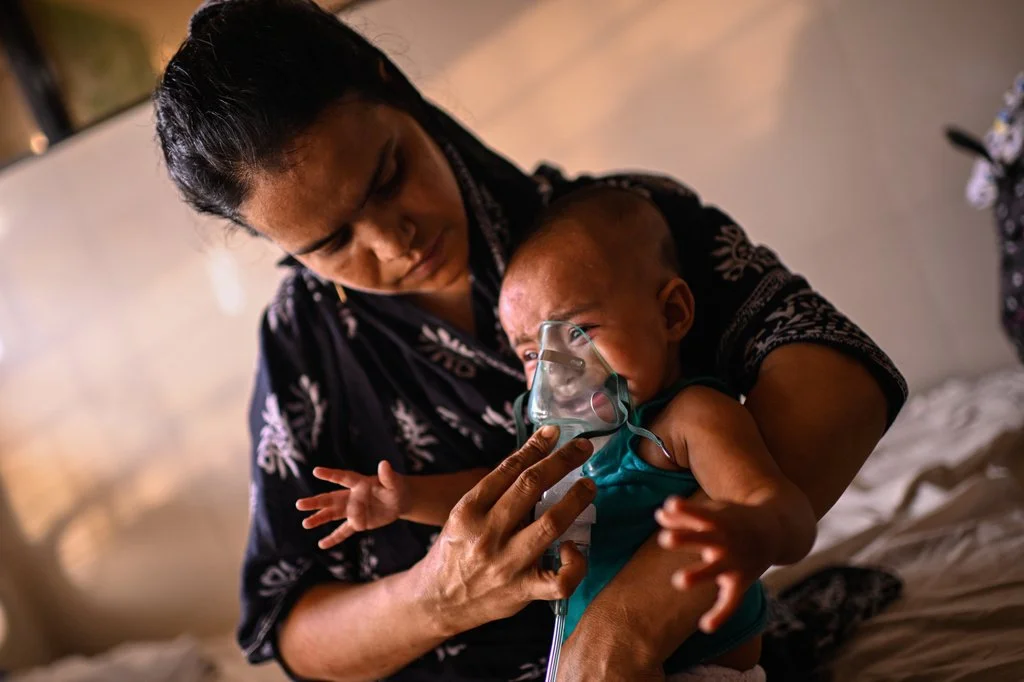
A mother administers a nebulizer treatment for her child suffering from measles at the Infectious Diseases Hospital in Dhaka, Bangladesh, Monday, April 6, 2026, amid a countrywide outbreak. (AP Photo/Mahmud Hossain Opu)
Bangladesh has historically maintained measles vaccination coverage considered high, by global standards, with rates consistently trending upwards of 90%, and hopes to achieve national elimination by 2020. However, the country is now confronting a rapidly escalating measles outbreak, prompting authorities to launch an emergency nationwide vaccination campaign aimed at containing the spread of a highly contagious and potentially deadly disease. From mid-March to early April, more than 7,500 suspected cases have been reported, with roughly 900 confirmed in just a matter of weeks, a rapid spike compared to the 125 confirmed cases recorded over the entirety of 2025. The unexpected speed and scale of the outbreak have raised urgent concerns, not only about immediate public health risks but also about the resilience of vaccination systems that, until recently, appeared robust. As the nation moves forward with containment strategies, questions are arising regarding what policies could have been implemented to prevent the current outbreak, and potential future outbreaks.
For decades, Bangladesh’s Expanded Program on Immunization (EPI) has been regarded as a public health success story. The government introduced the first dose of the measles-containing vaccine (MCV1) into its national program in 1989 and added a second dose (MCV2) in 2012. These efforts were part of a broader push toward measles elimination, with a national target set for 2020. By 2024, vaccination coverage remained high by global standards, with rates hovering around 96% for the MCV1 dose and 93% for the MCV2 dose, according to World Health Organization (WHO) estimates. These levels of coverage should provide a degree of strong population immunity that would make large outbreaks less likely, and reasonably give the impression of a robust public health position.
Yet the current surge in cases reveals the more complex reality of high national averages masking localized gaps in protection. Measles is one of the most infectious diseases in the world, capable of extremely rapid spread in communities where even small numbers of individuals remain unvaccinated. Statistically overlooked zero dose pockets hold the key to achieving contagion elimination. In a country as densely populated as Bangladesh, these areas of vulnerability can act as unnoticed fracture points, allowing outbreaks to expand quickly once transmission begins.
Recent disruptions in vaccine access have also played a significant role in widening the existing coverage gaps. Bangladesh’s national immunization strategy relies not only on routine vaccination starting at 9 months old, but also on periodic countrywide campaigns, typically conducted every four years, to reach children who may have missed their scheduled doses. These campaigns are crucial for identifying and vaccinating so-called “zero-dose” children, who have not received any routine immunizations, as well as those who are under-vaccinated.
This comprehensive system has faced repeated interruptions over recent years, creating the conditions for the current crisis. Necessary quarantine procedures and other disturbances during the COVID-19 pandemic initially delayed scheduled campaigns in 2020, creating a significant backlog of missed vaccinations. Approximately 3.2 million Bangladeshi children missed out on measles doses during just a 3-month stretch of lockdown that year. While many countries experienced similar setbacks, Bangladesh’s challenges were compounded by subsequent political instability, obstructing the recovery of typical measles vaccination campaigns from pre-pandemic years. Tensions escalated into widespread anti-government protests in 2024 that ultimately led to the ousting of long-time leader Sheikh Hasina. The resulting period of political transition disrupted administrative continuity, including vaccine distribution.
During this time, logistical and procurement challenges began to surface. Reports indicated that vaccine supply issues were likely to affect upcoming immunization efforts, and a nationwide measles campaign planned in 2024 did not take place as scheduled. For many communities, particularly those in more remote or underserved areas, this meant extended periods without access to vaccination services. Over time, these missed opportunities compounded, gradually eroding the protective buffer that historically high coverage rates had once provided. By 2025, almost 5 million children in Bangladesh were not fully immunized, up from non-immunized rates in 2020, the year the last national measles vaccine campaign was held. The consequences of losing this immunization buffer are now becoming visible, with suspected cases beginning to climb into the tens of thousands, and the number of casualties rising.
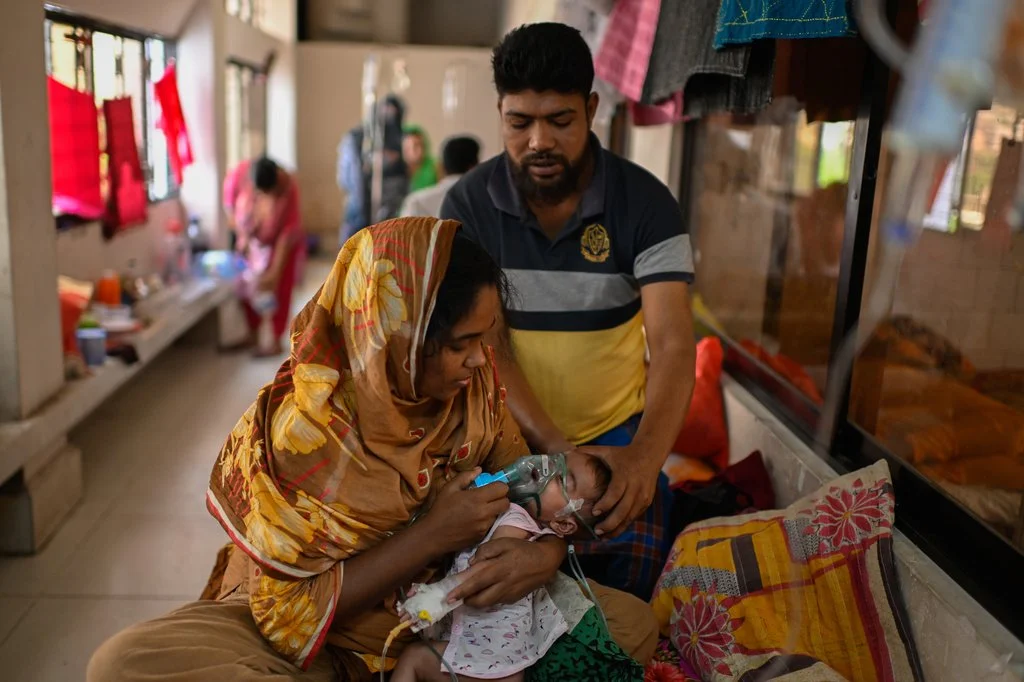
A mother administers a nebulizer treatment for her child suffering from measles at the Infectious Diseases Hospital in Dhaka, Bangladesh, Monday, April 6, 2026, amid a countrywide outbreak. (AP Photo/Mahmud Hossain Opu)
In response to the growing crisis, Bangladeshi authorities, in coordination with international partners, such as the WHO, UNICEF, and GAVI, have mobilized quickly to contain the outbreak. The emergency vaccination campaign aims to reach millions of children across the country, prioritizing high-risk areas and previously missed populations. District Rapid Response Teams (RRTs) supported by the WHO are being deployed regionally, with functions that may include raising awareness and conducting outreach, setting up and managing temporary vaccination sites, and assisting in detecting viral spread, in order to better assess impact and severity. These efforts are designed not only to slow the current outbreak, but also to rebuild immunity levels in critically undervaccinated areas, and prevent future resurgences.
The urgency of the emergency response reflects the broader understanding that when it comes to stopping the spread of measles, consistent prevention efforts are far more effective, and far less costly, than containment. Even short-lived disruptions in vaccination can have cascading effects, particularly in settings where population density facilitates rapid disease spread. At the same time, geographic and social inequalities can leave certain groups consistently underserved, creating persistent vulnerabilities within the system.
Bangladesh’s current crisis and campaign thus highlight the complex framework necessary to obtain and sustain disease control gains. Strong vaccination infrastructure and high coverage rates are essential, but they must be continuously maintained through reliable procurement sources, consistent campaign schedules, and stable governance to facilitate ease of access, awareness, and distribution. When any of these elements falter, even temporarily, the effects can accumulate in ways that are not immediately visible, but become apparent when an outbreak occurs as undervaccination accumulates.
The ongoing surge also underscores the importance of adaptability in public health systems. Bangladesh’s swift mobilization demonstrates its capacity to respond under pressure, drawing on years of EPI experience in large-scale vaccine campaigns. However, it also raises important questions moving forward, on how to build greater resilience into these existing systems–ensuring that they can withstand not only global shocks, like pandemics, but also domestic political and logistical disruptions that have proven to complicate national vaccine access.
This outbreak serves as a reminder that progress in disease control is always an ongoing effort. Measles elimination requires not just historically high coverage, but consistently high coverage across all communities. In a country like Bangladesh, where dense urban populations coexist with more geographically isolated rural areas, this is a continuous challenge.
As the emergency campaign proceeds over these weeks, its efficacy will be measured not only by how quickly it brings the current outbreak under control, but also by how it moves forward to close the accumulated gaps that allowed this surge to emerge in the first place.