
Jair Bolsonaro Begins 27-Year Prison Sentence for Plotting Coup
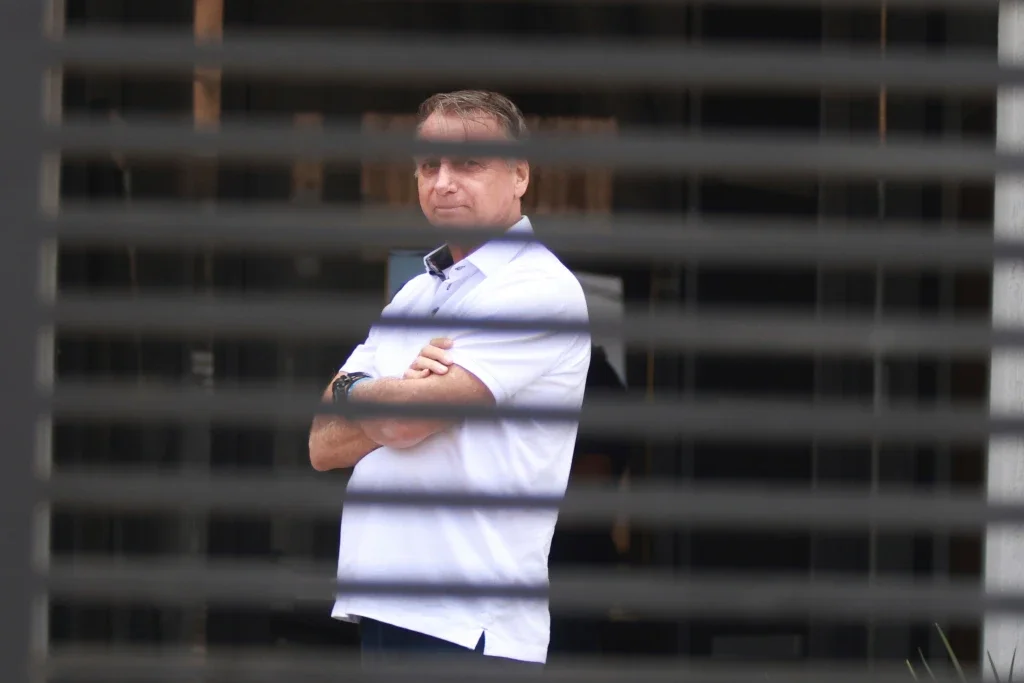
Brazil’s former President Jair Bolsonaro stands at the entrance of his home where he is under house arrest in Brasilia, Brazil, Tuesday, Sept. 2, 2025. (AP Photo/Luis Nova, File)
On Nov. 25, Brazil’s Supreme Court ordered former President Jair Bolsonaro to begin serving his 27-year prison sentence. Justice Alexandre de Moraes issued the order after Bolsonaro’s legal team declined to file a final appeal, triggering the formal end of the case. Bolsonaro, who had been under house arrest since August, was transferred to a specially prepared cell at the Federal Police headquarters in Brasilia.
Bolsonaro’s time under house arrest had already drawn controversy even before the sentencing order. Earlier this month, he admitted to trying to break his ankle monitor during what he claimed was a “nervous breakdown.” According to testimony he gave to an assistant judge, a change in his medication triggered hallucinations and panic, leading him to smash the device in the early hours of the morning. His lawyers and doctors repeated the same explanation to reporters, but Justice Alexandre de Moraes viewed the incident very differently. He viewed it as a deliberate attempt to flee the country from a 27-year prison term. Court records show the monitor was tampered with at 12:08 a.m., prompting de Moraes to issue an arrest warrant just hours later.
Bolsonaro was convicted in September of leading a conspiracy to prevent now-President Lula from taking office after the 2022 election. According to prosecutors, the plot was far-reaching. It included plans to sow public distrust in Brazil’s electronic voting system, enlist military officers to intervene in the transition of power, and assassinate Lula and now-Vice President Geraldo Alckmin. The scheme collapsed only after military chiefs refused to endorse the plan, leaving Bolsonaro politically isolated in the final days of his administration.
The investigation accelerated after the January 8, 2023, attack on the Three Powers Plaza, where thousands of Bolsonaro supporters stormed Congress, the Supreme Court, and the presidential palace one week after current President Lula’s inauguration. Federal police later issued an 884-page report detailing evidence of coordinated efforts by Bolsonaro and his inner circle to provoke a military uprising. Testimony and recordings obtained by investigators indicated that members of his team drafted emergency decrees to annul the election results and discussed poisoning or shooting de Moraes, the Supreme Court justice overseeing the case.
Bolsonaro’s closest allies received lengthy prison sentences as part of the broader prosecution. Former Defense Minister Walter Braga Netto, former Justice Minister Anderson Torres, ex-spy chief Alexandre Ramagem, and multiple high-ranking military officials were convicted on charges ranging from armed conspiracy to the violent abolition of Brazil’s democratic rule of law. Several have already begun serving their sentences; Ramagem fled to the United States earlier this month to avoid arrest.
The case also sparked tension with the United States. On Jul.9, President Donald Trump announced a 50-percent tariff on several Brazilian exports, linking the measure to Bolsonaro’s prosecution and calling the trial a “witch hunt.” The tariff later took effect on Jul. 30, when Trump signed an executive order implementing the increase. Despite this pressure, Brazil’s Supreme Court advanced the case and on Nov. 25 ordered Bolsonaro to begin serving his 27-year sentence.
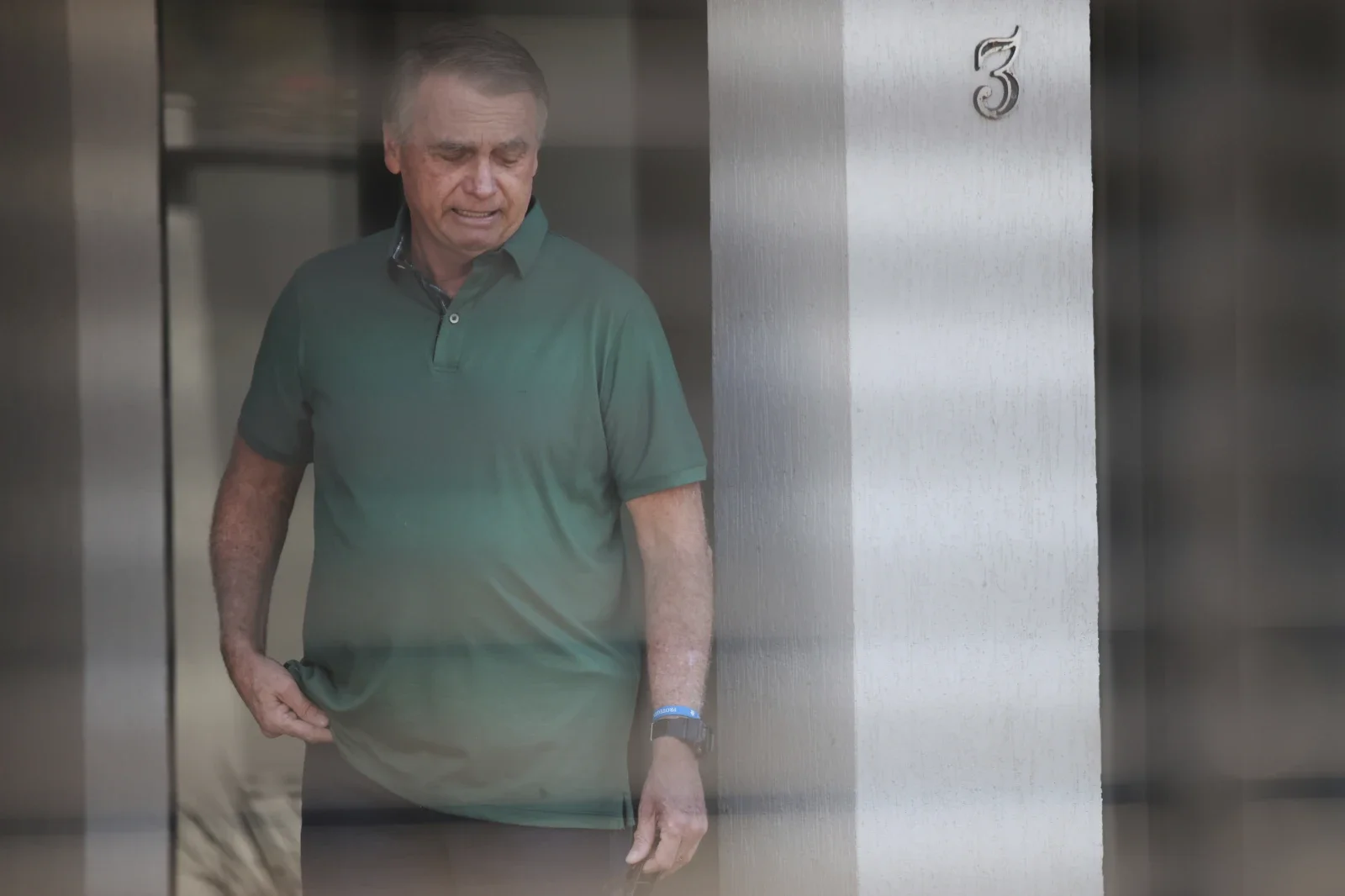
Brazil’s former President Jair Bolsonaro stands at the entrance of his home where he is under house arrest in Brasilia, Brazil, Thursday, Sept. 11, 2025. (AP Photo/Luis Nova)
The former president’s downfall has produced sharply divergent reactions across the country. Progressives celebrated the decision as an affirmation of judicial independence in the face of sustained attacks on electoral institutions. Bolsonaro’s supporters, however, denounced the ruling as politically motivated and echoed claims of persecution advanced by the former leader and his family. Despite calls by allies for mass demonstrations, only small groups have gathered outside the police headquarters in Brasília, reflecting what experts describe as Bolsonaro’s declining influence. Camila Rocha, a political scientist who studies Brazil’s new right, noted that recent polling shows a sharp drop in Bolsonaro’s base: only 13% of voters now support him “no matter what”. Even a major rally last month organized by his family drew just 2,000 people, a far cry from the enormous crowds he once commanded. “Could there be more protests? Sure,” Rocha said. “But I think this declining trend is established.”